
How AI is Transforming SEO in 2026 - ACECLiQ
Search engine optimization (SEO) has always evolved with technology, but in 2026, the transformation driven by artificial intelligence (AI) is more profound than ever. AI is no longer just a backend tool used by search engines, it is actively shaping how users search, how content is ranked, and how businesses connect with their audiences.
From AI-powered search results to conversational queries and personalized recommendations, the digital landscape is rapidly changing. Businesses that fail to adapt risk losing visibility, while those that embrace AI-driven SEO strategies, like those implemented by ACECLiQ, can gain a powerful competitive edge.
Understanding these changes is essential for marketers, entrepreneurs, and content creators who want to stay ahead in the modern search ecosystem.
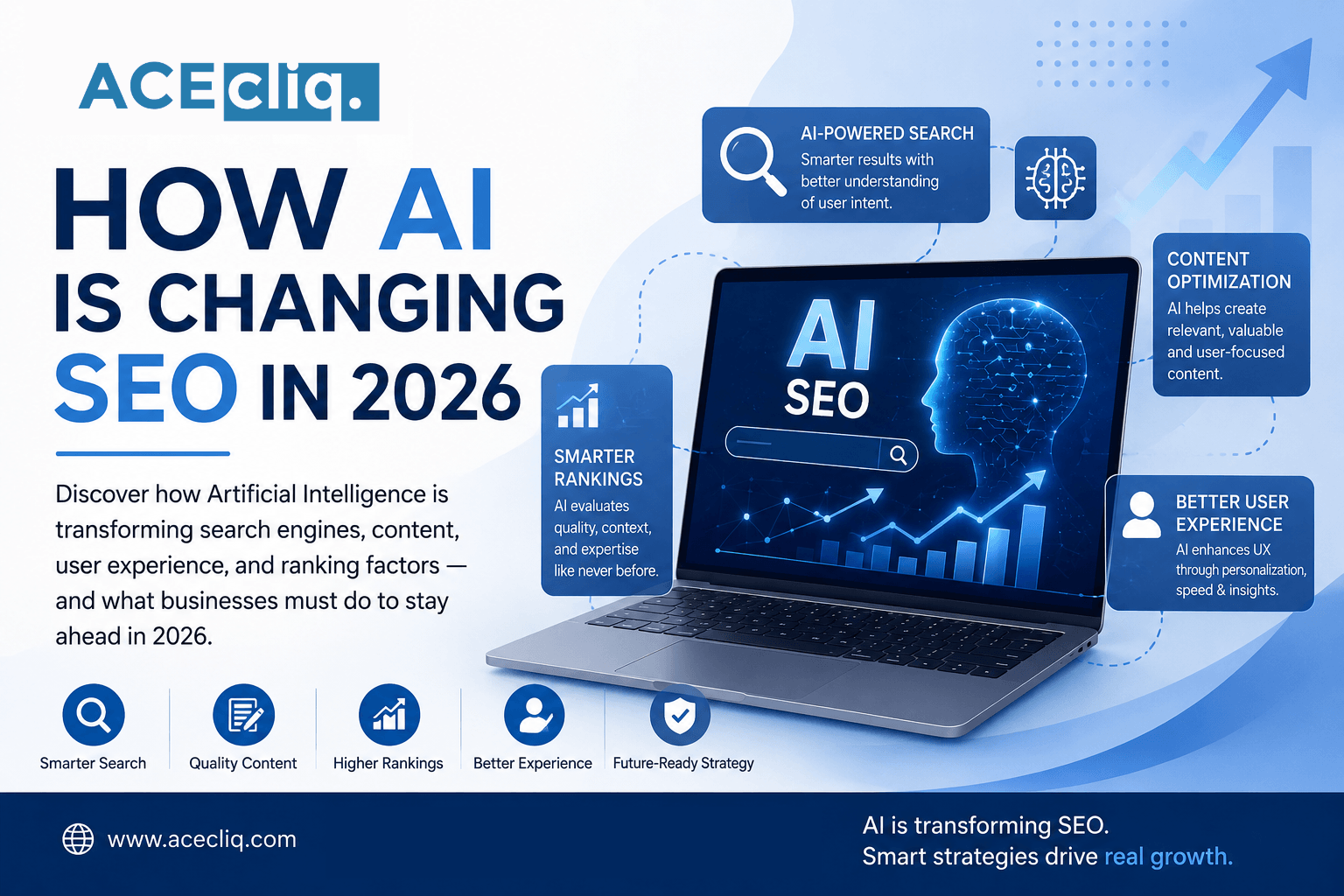
AI Overview
Artificial Intelligence is revolutionizing SEO by helping search engines better understand user intent, content quality, and search behavior. In 2026, businesses can no longer rely solely on traditional keyword optimization. AI-powered search experiences, conversational queries, personalized results, and advanced ranking algorithms are changing how websites gain visibility online. This guide explores the major ways AI is transforming SEO, the challenges and opportunities it creates, and the strategies businesses can use to maintain strong search performance in an increasingly AI-driven digital landscape.
Table of Content
- The Evolution of Search in the AI Era
- Why Search Intent Matters More Than Keywords
- AI-Powered Search Results Are Changing Visibility
- Content Quality Is More Important Than Ever
- The Rise of Conversational Search
- Topic Authority Over Single Keywords
- AI-Assisted Content Creation
- User Experience Is a Key Ranking Factor
- The Importance of Structured Data
- E-E-A-T: A Critical SEO Factor
- What Businesses Should Do Next
- FAQs About AI and SEO in 2026
- Conclusion
The Evolution of Search in the AI Era
Traditional SEO relied heavily on keywords, backlinks, and technical optimization. While these factors still matter, AI has enabled search engines to understand content at a much deeper level.
Modern algorithms can now analyze:
- User intent behind searches
- Context and meaning of content
- Relationships between topics
- User behavior patterns
- Content quality and credibility
Instead of simply matching keywords, search engines now prioritize content that genuinely answers user queries and delivers value.
This shift means businesses must focus on creating meaningful, user-centric content rather than just optimizing for rankings.
Why Search Intent Matters More Than Keywords?
One of the biggest changes AI has introduced is the focus on search intent.
For example, when someone searches for “best CRM software,” they could be:
- Comparing different tools
- Reading reviews
- Checking pricing
- Ready to make a purchase
AI helps search engines understand these intentions and deliver the most relevant results.
Practical Tip
Before creating content, ask yourself:
- What problem is the user trying to solve?
- What information do they need?
- What action might they take next?
Answering these questions ensures your content aligns with user expectations.
AI-Powered Search Results Are Changing Visibility
Search engines now provide direct answers, summaries, and insights within search results. Users often get what they need without clicking multiple links.
This creates both challenges and opportunities.
To stay visible, businesses must create content that AI systems trust and reference—an approach strongly emphasized by ACECLiQ.
Key elements of successful content include:
- Clear and concise explanations
- Structured formatting
- Accurate and updated data
- Expert insights
- Credible sources
The goal is no longer just ranking, it’s becoming a trusted authority.
Content Quality Is More Important Than Ever
AI can easily detect low-quality or spammy content. Pages created only for rankings often fail to perform.
Search engines now evaluate:
- Originality
- Depth of information
- Expertise
- Engagement
- Usefulness
What High-Quality Content Looks Like
- Answers specific questions clearly
- Includes real-world examples
- Covers topics in depth
- Offers unique insights
- Maintains accuracy
Businesses that focus on genuine value consistently outperform those relying on mass-produced content.
The Rise of Conversational Search
With voice assistants and AI chat tools, users now search in a more natural, conversational way.
Instead of typing:
“SEO trends 2026”
Users ask:
“What are the top SEO trends businesses should focus on this year?”
How to Optimize for Conversational Search
- Write in a natural tone
- Use question-based headings
- Provide direct answers
- Add FAQ sections
- Focus on clarity and completeness
Content that mimics human conversation performs better in modern search environments.
Topic Authority Over Single Keywords
Search engines now evaluate websites based on their overall expertise in a subject area.
For example, a website covering SEO, content marketing, analytics, and AI marketing is more likely to rank higher than one targeting isolated keywords.
How to Build Topic Authority
Create interconnected content such as:
- Beginner guides
- Advanced tutorials
- Industry insights
- Case studies
- Best practices
This helps search engines recognize your authority and improves long-term rankings.
AI-Assisted Content Creation
AI tools are now widely used for content creation, research, and optimization. However, relying solely on AI is not enough.
The best results come from combining:
- AI efficiency
- Human creativity
- Industry expertise
- Editorial review
Best Practices
Use AI for:
- Research and data gathering
- Content outlines
- Draft creation
- Idea generation
Always ensure human review for accuracy and quality.
User Experience Is a Key Ranking Factor
AI evaluates how users interact with your website. Poor user experience can negatively impact rankings.
Important factors include:
- Page speed
- Mobile responsiveness
- Easy navigation
- Readability
- Engagement
How to Improve UX
- Optimize loading speed
- Simplify website structure
- Use clear headings
- Make content easy to read
- Ensure mobile-friendly design
A better user experience leads to better SEO performance.
The Importance of Structured Data
Structured data helps search engines understand your content more effectively.
By using schema markup, you can provide additional context about:
- Articles
- Products
- Services
- Reviews
- FAQs
Common Schema Types
- FAQ Schema
- Article Schema
- Product Schema
- Local Business Schema
- Review Schema
This improves visibility and increases chances of appearing in rich results.
E-E-A-T: A Critical SEO Factor
Experience, Expertise, Authoritativeness, and Trustworthiness (E-E-A-T) are essential for SEO success.
AI-driven search systems prioritize content from credible and trustworthy sources.
To improve E-E-A-T:
- Showcase expertise
- Share real-world experience
- Provide accurate information
- Build trust signals
- Maintain transparency
Content backed by credibility performs better in search rankings.
What Businesses Should Do Next
To stay competitive in 2026, businesses should:
1. Focus on Helpful Content
Create content that solves real problems.
2. Build Authority
Develop comprehensive resources in your niche.
3. Optimize Technical Performance
Ensure fast, smooth website performance.
4. Use AI Strategically
Leverage AI tools while maintaining human oversight.
5. Stay Updated
Continuously adapt to evolving search trends with insights from platforms like ACECLiQ.
Conclusion
Artificial intelligence is reshaping the future of SEO in powerful ways. Success is no longer about keywords alone, it’s about delivering value, understanding user intent, and building trust.
Businesses that embrace AI, focus on high-quality content, and prioritize user experience, like those guided by ACECLiQ, will thrive in this new era. Instead of fearing AI, organizations should leverage it as a tool to create better content, stronger connections, and long-term growth.