
Core Web Vitals Explained: How Website Speed Impacts SEO in 2026 | ACECLiQ
Website speed has evolved from being a convenience to becoming a critical ranking factor in modern SEO. Visitors expect websites to load almost instantly, respond quickly to interactions, and provide a smooth browsing experience across every device. When these expectations are not met, users are more likely to leave, resulting in higher bounce rates and lower conversions.
Understanding Core Web Vitals Explained: How Website Speed Impacts SEO helps businesses improve both search visibility and user satisfaction. Google introduced Core Web Vitals as a set of performance metrics that evaluate real-world user experience, making them an essential component of modern Technical SEO.
At ACECLiQ, we help businesses optimize website performance by improving Core Web Vitals, increasing loading speed, and creating websites that rank better while delivering exceptional user experiences.
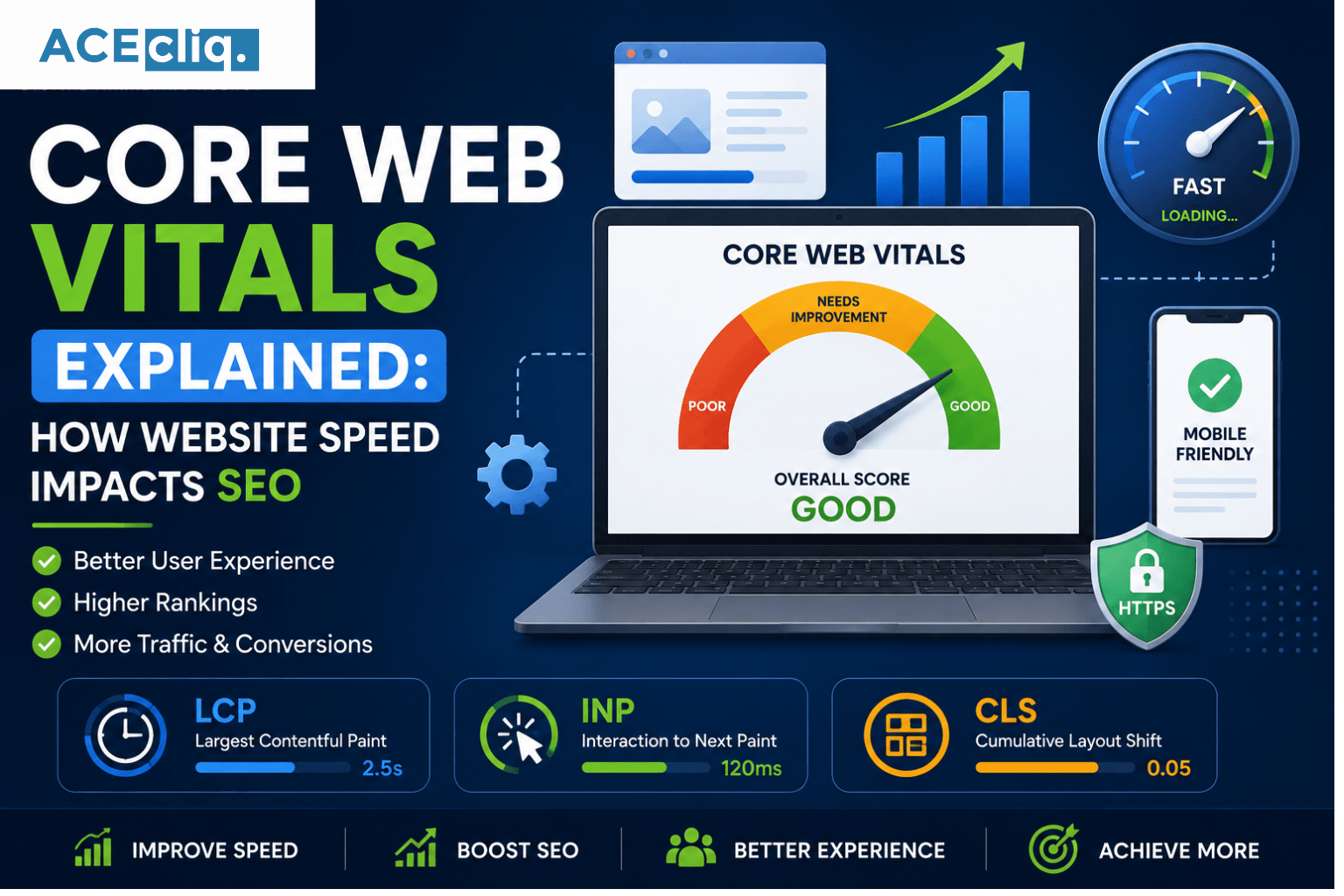
AI Overview
Google increasingly prioritizes user experience when determining search rankings, making Core Web Vitals Explained: How Website Speed Impacts SEO one of the most important topics for website owners and marketers. Core Web Vitals measure loading performance, responsiveness, and visual stability to evaluate how users experience a website. Improving these metrics not only helps achieve better Google rankings but also increases engagement, reduces bounce rates, and boosts conversions. This guide explains each Core Web Vital, why website speed matters, and how businesses can optimize their websites for long-term SEO success.
What Are Core Web Vitals?
Core Web Vitals are Google's user experience metrics designed to measure how quickly and smoothly a webpage performs for real users.
Unlike traditional page speed tests that focus only on loading time, Core Web Vitals evaluate how users actually experience a website. They measure three critical areas:
- Loading performance
- User interaction responsiveness
- Visual stability
These metrics help search engines determine whether a website provides a positive browsing experience. As Google's algorithms continue to prioritize user-centric signals, Website Speed SEO has become an important part of long-term search optimization.
Why Website Speed Matters for SEO
Website speed influences nearly every aspect of digital marketing.
A slow-loading website not only frustrates visitors but also affects search rankings, user engagement, lead generation, and sales. When pages load quickly, users are more likely to stay, explore additional content, and complete desired actions.
Improving Website Performance SEO provides several benefits:
- Better user experience
- Lower bounce rates
- Higher engagement
- Increased conversion rates
- Improved crawl efficiency
- Stronger search rankings
Fast websites also encourage visitors to trust your business, creating a better overall customer experience.
Understanding the Three Core Web Vitals
Google currently evaluates three primary performance metrics that collectively define the user experience. Each metric measures a different aspect of website performance, making all three equally important for successful Core Web Vitals Optimization. Businesses should continuously monitor and improve these metrics to maintain strong search performance.
Largest Contentful Paint (LCP)
Largest Contentful Paint (LCP) measures how quickly the largest visible element on a webpage loads.
This element is often:
- A hero image
- A featured banner
- A large heading
- A video thumbnail
A fast LCP reassures visitors that the page is loading correctly. Slow LCP scores often result from oversized images, slow servers, excessive JavaScript, or render-blocking resources. Improving image optimization, upgrading hosting, and minimizing unnecessary code are effective ways to improve loading performance.
Interaction to Next Paint (INP)
Interaction to Next Paint (INP) measures how quickly a webpage responds after a user interacts with it.
Examples include:
- Clicking a button
- Opening a menu
- Submitting a form
- Selecting a product option
Responsive websites create smoother user experiences and encourage higher engagement. Poor INP scores often occur because of heavy JavaScript execution, slow processing, or inefficient event handling. Optimizing scripts and reducing unnecessary browser tasks significantly improves responsiveness.
Cumulative Layout Shift (CLS)
Cumulative Layout Shift (CLS) measures the visual stability of a webpage while it loads. Users often become frustrated when content unexpectedly shifts as images, advertisements, or fonts load.
Examples include:
- Buttons moving before a click
- Images pushing content downward
- Text shifting unexpectedly
Reducing layout shifts creates a smoother browsing experience while improving accessibility and usability. Proper image sizing, reserved content space, and optimized font loading help improve CLS scores.
How Core Web Vitals Affect Google Rankings
Google considers page experience as one of many ranking signals.
Although high-quality content remains essential, websites with poor performance may struggle to compete against technically optimized competitors.
Strong Core Web Vitals support SEO by improving:
- User satisfaction
- Engagement metrics
- Session duration
- Mobile usability
- Crawl efficiency
Businesses should view website speed as both a user experience improvement and an SEO investment.
Common Website Speed Problems
Many websites experience avoidable performance issues that negatively impact both users and search rankings.
Some of the most common causes include:
- Uncompressed images
- Slow hosting servers
- Excessive JavaScript
- Large CSS files
- Too many third-party scripts
- Poor caching configuration
- Unoptimized fonts
Identifying these issues through regular performance testing allows businesses to improve website efficiency before rankings are affected.
How to Improve Core Web Vitals
Improving Core Web Vitals Optimization requires a combination of technical improvements and ongoing monitoring.
Businesses should focus on compressing images, implementing browser caching, minimizing CSS and JavaScript files, enabling lazy loading, reducing server response time, and using a reliable content delivery network (CDN). Choosing lightweight themes and optimizing plugins also contribute to faster loading speeds. Rather than making isolated changes, businesses should treat website performance as a continuous optimization process.
Best Tools to Measure Website Speed
Several professional tools help evaluate Website Speed SEO performance.
Popular tools include:
- Google PageSpeed Insights
- Google Search Console
- Lighthouse
- GTmetrix
- WebPageTest
These platforms provide actionable recommendations for improving Core Web Vitals while helping businesses monitor long-term performance trends.
Regular testing ensures websites continue meeting Google's evolving performance expectations.
Common Mistakes Businesses Should Avoid
Many businesses unknowingly reduce website performance by installing unnecessary plugins, uploading oversized media files, ignoring mobile optimization, or delaying technical maintenance.
Another common mistake is focusing only on desktop performance while overlooking mobile users. Modern SEO requires businesses to optimize every aspect of user experience across all devices. Routine performance audits help identify issues before they affect rankings and customer satisfaction.
Final Conclusion
Understanding Core Web Vitals Explained: How Website Speed Impacts SEO is essential for businesses that want to remain competitive in today's search landscape. Website speed is no longer just a technical consideration—it directly influences user experience, engagement, conversions, and search visibility.
Businesses that prioritize Core Web Vitals, improve Website Performance SEO, and continuously optimize loading speed create stronger digital experiences that benefit both users and search engines. At ACECLiQ, we help businesses improve website performance through advanced Technical SEO, Core Web Vitals optimization, and comprehensive website audits that support sustainable organic growth and higher Google rankings.