Organic SEO
AI Overview:
Organic SEO is the process of improving a website’s visibility in unpaid search engine results by optimizing content, technical structure, and user experience. In 2025–2026, organic SEO focuses on search intent, content quality, Google EEAT signals, and AI-driven ranking systems rather than shortcuts or keyword stuffing. It matters because organic search delivers sustainable traffic, higher trust, and long-term ROI. Businesses that invest in organic SEO build authority, attract high-intent users, and remain competitive across traditional and AI-powered search results.
Introduction
In 2025–2026, organic SEO remains one of the most powerful and reliable digital growth strategies. As search engines become more AI-driven and users more selective, businesses can no longer rely on paid ads alone for visibility. Organic SEO helps brands earn trust, credibility, and consistent traffic by aligning content with user intent and search engine quality standards. With rising ad costs, privacy changes, and zero-click searches, organic visibility has become a long-term asset rather than a short-term tactic. This makes organic SEO essential for businesses that want sustainable growth, stronger brand authority, and meaningful engagement in today’s competitive digital ecosystem.
What Is Organic SEO in Today’s Context?
Organic SEO refers to optimizing a website to rank naturally in search engine results without paying for ads. In a modern, practical context, it includes:
- Intent-based keyword and topic optimization
- High-quality, EEAT-aligned content
- Technical SEO and site performance
- User experience and engagement signals
Organic SEO focuses on earning visibility through relevance and trust rather than buying attention.
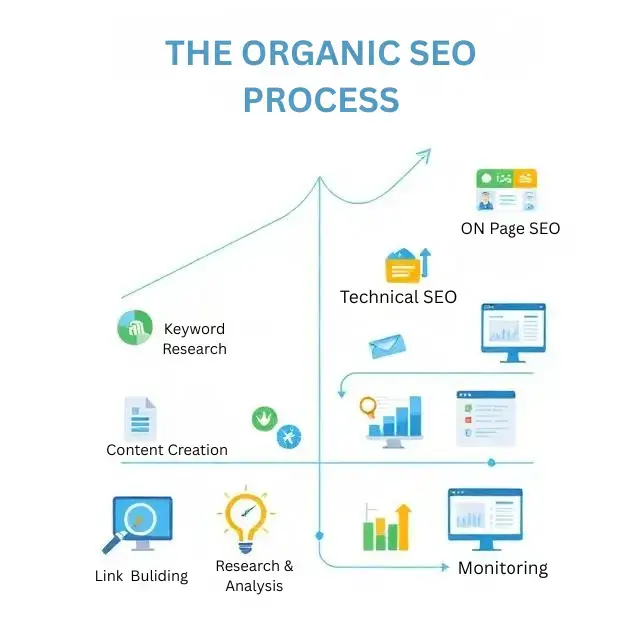
The Organic SEO Process: How It Works
Step 1: Research & Search Intent Analysis
Organic SEO starts with understanding what users are searching for, why they are searching, and how content should address their needs.
Step 2: Content Creation & Optimization
Content is created around topics, not just keywords, ensuring clarity, depth, and usefulness for real users.
Step 3: Technical & On-Page SEO
Website structure, page speed, mobile usability, and internal linking are optimized to support content performance.
Step 4: Monitoring & Continuous Improvement
Rankings, traffic quality, and engagement are tracked regularly to refine strategies and improve results over time.
Key Factors That Influence Organic SEO Success
AI-Driven Search & Intent Optimization
Search engines now interpret context and intent. Organic SEO aligns content with how users ask questions, not just exact phrases.
EEAT-Focused Content Quality
Experience, expertise, authority, and trust are essential for long-term rankings and credibility.
Mobile-First & Page Experience
Fast-loading, mobile-friendly websites perform better in organic search results.
Content Depth & Topical Authority
Covering topics comprehensively helps build authority and improves visibility across related queries.
Data-Driven Optimization
Analytics and search performance data guide decisions and ongoing improvements.
Emerging Organic SEO Trends (2025–2026 Outlook)
Organic SEO continues to evolve with trends such as:
- AI-generated search results and SGE optimization
- Voice and conversational search queries
- Entity-based and topical SEO
- First-party data and privacy-focused strategies
- Content designed for humans, validated by data
Organic SEO vs Paid Search
Paid Search
- Immediate visibility
- Stops when budget ends
- Lower long-term trust
Organic SEO
- Sustainable traffic growth
- Compounding long-term value
- Higher credibility and trust
This is why organic SEO is considered a long-term investment rather than an expense.
Consumer Behavior & Real-World Impact
Modern users trust organic search results more than ads. They expect:
- Helpful and accurate information
- Clear answers to their questions
- Fast, easy-to-use websites
Organic SEO aligns with these expectations, helping businesses attract users who are more likely to engage, convert, and return.
Conclusion
Organic SEO is not about quick wins—it’s about building lasting visibility, trust, and relevance. In 2025–2026, with AI-driven search and informed consumers, businesses that invest in organic SEO gain a competitive advantage that compounds over time. By focusing on intent, quality, and technical excellence, organic SEO delivers sustainable growth and meaningful engagement. If your goal is long-term digital success rather than temporary traffic spikes, organic SEO is the strategy that truly delivers.
FAQs
Is organic SEO still effective in 2025–2026?
Yes. Organic SEO remains one of the most cost-effective and sustainable digital marketing strategies.
How long does organic SEO take to show results?
Typically, noticeable improvements appear within 3–6 months, depending on competition and consistency.
Does organic SEO work without content?
No. High-quality, intent-focused content is the foundation of organic SEO.
Is organic SEO better than paid advertising?
Organic SEO is better for long-term growth, while paid ads support short-term visibility. Both work best together.
Recent Comments